The happiness industry wants your money. In return it promises steady state happiness. Happiness that never ends, a state of constant bliss.
The happiness industry is the biggest industry in the world. There are multiple divisions. Christian, Islamic, Buddhist, New Age, Therapy, Mindfulness, Drugs – the list goes on.
But what if we just aren’t designed for steady-state happiness. What if happiness is a by-product of other things? What if struggling and finally achieving something gives happiness, if missing someone and then finally meeting up with them creates happiness. What if happiness is a part of a pattern that also requires unhappiness.
What if it is part of a psychological game our minds play with us? Fort – Da was a game that Freud coined observing his grandchild playing with a bobbin. “Gone” “There”. Hide an object from a young child and then make it reappear and you will see pure joy.
 Could happiness be a feedback loop for good behavior, as in behavior that helps us survive as individuals and as a group? The pleasure from food and sex are very obvious positive feedback loops that encourage personal and group survival.
If the ultimate survival skill for humans is the ability to learn and adapt, then struggle followed by success, a loss followed by gain is the pattern for peak moments of happiness.
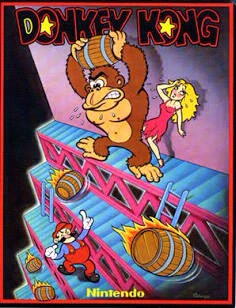
Every good story follows the pattern of struggle and resolution. Almost every video game does the same. When we play Donkey Kong – because who doesn’t enjoy Donkey Kong – we are taking a glimpse into our own subconscious, we are playing Fort – Da.
 If happiness is our own psyche’s a way of rewarding good behavior then it can’t stand alone as a goal. If we detach happiness from the behaviors that surround it, it no longer becomes a reward. We break our own nature.
For the happiness industry to succeed it needs you to believe in constant state happiness, but adults aren’t really so different from children and shouldn’t be afraid of admitting it. We need to play Fort – Da. We need to follow the pattern of every story told and every video game. A struggle followed by success and growth.
Happiness is overrated– Harvard Business Review
 William F Cooper