In the early 19th century England a group known as the Luddites attacked textile mills and broke up new technology that was destroying their skilled jobs as hand weavers. As the industrial revolution gained pace the very real threat of whole crafts and skills disappearing led to fear and violence.

The movement was informal and not well organized. Disguises were often worn during the attacks, including men wearing dresses. How this acted as an effective disguise for men with beards is unclear but that’s another story. Protests were put down by the government and the Luddite movement eventually fizzled out.
In 1978 a BBC Horizon programme examined the rise of microprocessors and questioned whether the next generation would ever work.
The programme talked about the demise of petrol pump attendants and wondered if software development would turn into a real industry that could replace some of the lost jobs.
This fear about the effects of automation on employment has been a regular occurrence during periods of rapid technological growth. It has become known as the Luddite fallacy. The argument goes that, rather than leading to long term mass unemployment, automation drives cheaper production and the extra purchasing power this creates results in the growth of existing and new industries.
The Horizon programme gives a great explanation of the technology and the jobs that were threatened. It is worth viewing both as a reflection of thinking at that time and for some perspective about similar arguments now playing out. What it couldn’t say where new jobs would come from. It, therefore, projected uncertainty about the future.
Now The Chips Are Down – BBC Horizon
The computer games industry did exist but was relatively small. Mobile phones were just making an appearance and smartphones were unheard of. In other words, many of today’s industries had yet to fully emerge.
We hate uncertainty. Uncertainty is stressful. It’s more stressful than assuming the worst. It’s just the way we are built. In times of uncertainty, there will be no shortage of people assuming the worst.
Right now the automation debate is getting its regular replay throughout the business media as developments like driverless trucks and cars look to be within striking distance.
Robots could make half the world unemployed – CNET
Robots will steal your job – Business Insider
America’s dazzling tech boom has a downside, not enough jobs – Wall Street Journal
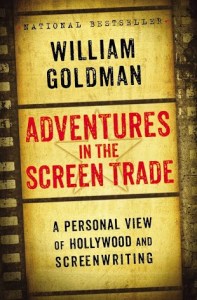
William Goldman wrote the screenplays for many successful films including Butch Cassidy and the Sundance Kid, The Princess Bride, and Marathon Man. He knows the movie industry. In his 1983 book Adventures In The Screen Trade, he shares stories of his career and summed up the collective wisdom of Hollywood in picking the next big hit – “Nobody knows anything”. We think we know, we try to predict, but movie hits often emerge from left field. The biggest hits are sometimes sudden and sometimes they are a slow burn, gaining popularity after they’ve left the movie theatres. There are no rules. Looking at the wider economy you see exactly the same uncertainty.
If this next wave of automation does destroy whole sectors of the job market, it’s not obvious what will replace them.
We are once again entering uncertain times, and that is uncomfortable, but uncertainty is not the same as certain doom.
 William F Cooper