
First published in 1922, Herman Hesse’s Siddhartha remains one of the most influential western books for people interested in a spiritual journey towards enlightenment.
In the novel, the character leaves a position of wealth and power behind to live as an ascetic and crosses paths with the already enlightened Buddha. Siddhartha rejects the notion of finding enlightenment as a follower of Buddha and determines that he must find his own path.
This path leads him to a life of materialism and attachment before returning to a simpler existence.
It is after this journey that he finds peace and eventually enlightenment, where he experiences the whole of his existence, suffering and all, as part of a greater unity of existence.
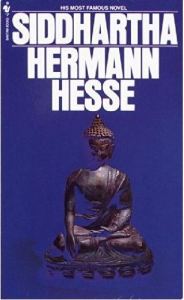
Herman Hesse’s novel is more complex than it sometimes seems. There is within it the recognition that the character needed to live a materialistic and striving way of life in order to move past it.
It does, however, share the Buddhist notion that suffering is part of life and that enlightenment is an attempt to move past suffering. In Buddhism and in Siddhartha, this means abandoning attachment and material pleasures.
Here’s the thing though, as Siddhartha realises himself, suffering is part of the totality of life. Suffering is caused by attachment, but attachment also leads to much of the joy and pleasure we experience as part of the human condition.
Attachment causes suffering partly because of the impermanence of everything. Enlightenment is an experience of the timeless and universal. Does this mean that things which last longer are more valuable? Does a stone hold more spiritual value than a flower that blooms and then dies back in winter?
Most Buddhists would argue no and that this is a distortion of their beliefs, since enlightenment also breaks through the false notion of time. If that is the case, why are the passing loves and pleasures and lives of humans not to be valued for their own sake. These are part of the greater unity so why deny and suppress them. We all eventually turn back to dust, so why not embrace the unique experiences of our current form. Shouldn’t humans embrace life fully along with the suffering that involves? Shouldn’t we take the Sinatra approach:
Before my numbers up I’m gonna fill my cup
I’m gonna live, live, live, until I die!
 William F Cooper