
Throughout history there have been visions of Utopia that externalise common views of the good life.
In medieval Europe the mythical Land of Cockaigne was a place of unlimited food, leisure and sexual liberty unrestricted by contemporary moral codes. In the Kildare poems even the monks and nuns let loose when in Cockaigne.
“The young monks who see them
get ready and start out
and come to the nuns immediately,
and each monk takes one for himself
and carries his prey away quickly
to the great grey abbey,
and teaches the nuns a prayer
with their legs up and down in the air”
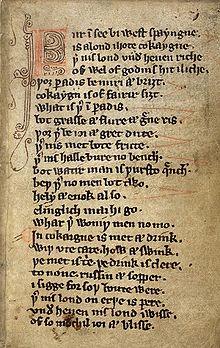 Kildare Poems – the Land of Cockaygne – 1330
In a Dutch poem describing Cockaigne (or Cockaygne) the mythical land is compared favourably with Heaven.
“Though Paradise is fair and bright,
Cockaygne is a finer sight”
Paradise is safe and without suffering but it is kind of boring. There is more fun to be had in Cockaigne.
“The geese when roasted on the spit
Fly to the abbey (believe it or not)
And cry out ‘Geese, all hot, all hot!’
With garlic in great quantity,
The best-dressed geese a man could see.
The larks are known to do the same—
Land in your mouth, well-cooked and tame“
Dit is van dat edele land van Cockaengen
The reason for this view of utopia is not hard to understand. Life in medieval Europe was tough and short. The very idea of unlimited food and drink was out of reach to people who often went hungry. There are many parts of the world today where this is still true.
Here in the western world, for those on a comfortable income, the Land of Cockaigne has arrived at a shopping mall near you. All you can eat buffets essentially offer a short visit to Cockaigne.
If you want to take it to the next level, you can now go on an all inclusive holiday and have the Cockaigne experience on a cruise ship or in a resort. Here you will also find a land free of sexual guilt if that is your thing.
As long as the myth of Cockaigne has existed, there have also been people who warn that Cockaigne isn’t all it’s cracked up to be. A quick look at the Pieter Bruegel painting confirms that it is quite critical. Bruegel, it has been assumed, is making a commentary on the political situation at the time of the Dutch Revolt, but regardless of that, it is clearly not a ringing endorsement of the virtues of Cockaigne.
So, does Cockaigne make people happy? There’s not a lot of scientific research round this, but its safe to say that the spread of all you can eat buffets and cheap food in the west has not led to a general increase in happiness. People get obese, feel bad about their weight and move on to other visions of Utopia.
Cockaigne buffets are probably a great illustration of a fundamental flaw in human nature. We seek out and gain pleasure from food, drink and sex but because these desires grew out of an environment of scarcity there was never any need for an off button. As soon as scarcity is no longer an issue the flaw in not having an off button becomes XXL.
Probably the best thing you can say about Cockaigne is that it’s a good place for a holiday but you wouldn’t want to live there.
 William F Cooper